Robot Mass Production Ignites Heat Treatment Boom: The Future of Car Bottom Furnaces
The large-scale mass production of the robotics industry is directly triggering an explosion in demand for core components such as reducers, servo motors, lead screws, bearings, and joint housings. Most of these parts are manufactured from special steels or alloys and must undergo rigorous heat treatment processes—including quenching, tempering, carburizing, and nitriding—to achieve the necessary hardness, wear resistance, and toughness.
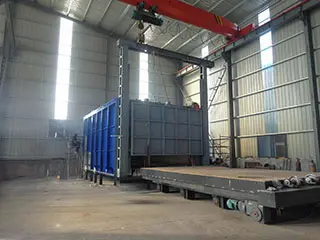
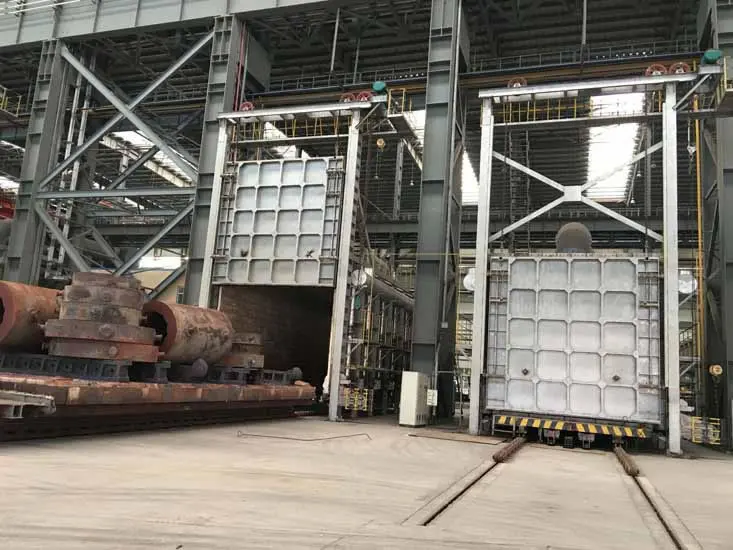
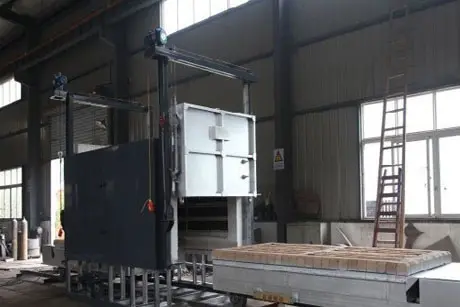
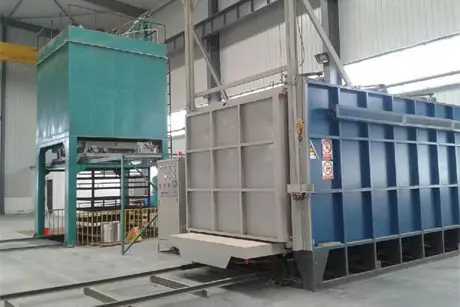
As the core equipment in the heat treatment industry for handling large, heavy, and batch workpieces, the Car Bottom Furnace is poised to face significant growth opportunities and transformation demands amidst the wave of robot mass production. Below is a detailed analysis of the future prospects.
1. Direct Explosion in Market Demand
Robot mass production implies an exponential growth in component demand, directly driving up the volume of heat treatment processing.
Key Benefiting Components:
- Reducer Housings & Gears: Humanoid and industrial robots require vast quantities of precision reducers (e.g., RV reducers, harmonic drives). Their gears and housings need carburizing and quenching. Car bottom furnaces are ideal for batch processing large gear shafts or bulky housings.
- Lead Screws & Guide Rails: As core components of linear actuators, these require high-frequency quenching or overall heat treatment. Long shaft parts are frequently processed in batches using car bottom furnaces.
- Joint Bearings & Structural Parts: High-load joint components require quenching and tempering. The large loading capacity of car bottom furnaces offers a distinct advantage here.
Outlook: It is projected that over the next 3-5 years, as humanoid robots enter their "mass production year," orders for specialized car bottom furnaces dedicated to these components will increase substantially.
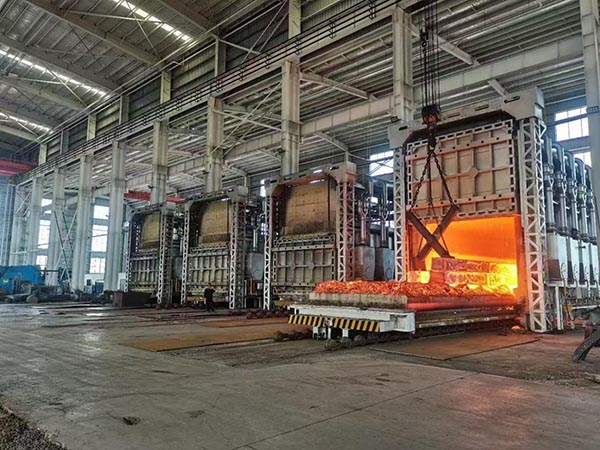
2. Equipment Technology Upgrade: Transitioning to "Intelligence & Automation"
Traditional car bottom furnaces rely on manual operations (lifting, loading/unloading, temperature control), which cannot meet the strict requirements for consistency and high precision demanded by robotic components. Robot mass production will force a technological revolution in furnace design:
- Fully Automatic Loading/Unloading Systems:
- Trend: Deep integration of car bottom furnaces with AGVs (Automated Guided Vehicles), robotic arms, or truss robots. This enables a fully unmanned workflow: "Automatic blank loading → Automatic furnace entry/exit → Automatic unloading after treatment."
- Value: Reduces human intervention, eliminates manual temperature control errors, and ensures quality consistency for millions of parts.
- Precision Temperature Control & Digital Craftsmanship:
- Trend: Equipping furnaces with high-precision thermocouples and intelligent PID control systems, improving temperature accuracy from ±5°C to ±1°C or better.
- Value: Meets the extreme requirements for the microstructure of precision robot parts (e.g., flexible wheels in harmonic drives).
- Data Networking & Digital Twins:
- Trend: Connecting furnaces to factory MES (Manufacturing Execution Systems) to upload temperature curves and energy consumption data in real-time, supporting remote monitoring and process optimization.
- Value: Achieves full quality traceability, complying with automotive or aerospace-grade production standards.
3. Segmentation and Customization of Application Scenarios
With the wide variety of robot components, general-purpose car bottom furnaces may not suffice. Specialized furnaces will become a new growth point:
- Large Structural Part Furnaces: Designed for solution and aging treatments of large aluminum alloy or steel structures (e.g., humanoid robot torsos and bases), requiring extra-large dimensions.
- Multi-Purpose/Car Bottom Combinations for Small Precision Parts: Developed for high-volume small gears and bearings, utilizing multi-chamber linkage or continuous car bottom furnaces to boost efficiency.
- Vacuum/Atmosphere Protection Furnaces: To prevent surface oxidation and decarburization (reducing downstream machining costs), demand for vacuum car bottom furnaces or nitrogen-protected furnaces will rise.
4. Green Energy Efficiency as a Hard Indicator
The robotics industry emphasizes high efficiency and energy saving, placing immense environmental pressure on its supply chain, including heat treatment.
- Energy-Saving Retrofits: Traditional furnaces are energy-intensive. Future models will widely adopt new refractory fiber materials, regenerative combustion technologies, and waste heat recovery systems, aiming to reduce energy consumption by 20%-30%.
- Clean Energy Substitution: Electric heating car bottom furnaces will gradually replace gas-fired furnaces, especially in regions with abundant clean electricity, to align with carbon neutrality policies.
5. Business Model Shift: From Selling Equipment to Selling Services
- Surge in Outsourcing Demand: Many robotics startups may build assembly lines but avoid building their own heat treatment workshops due to difficult environmental approvals and high capital investment. This will spawn professional third-party heat treatment centers, which will purchase highly efficient, automated car bottom furnaces to provide outsourcing services for robot manufacturers.
- Turnkey Solutions: Equipment manufacturers will no longer just sell furnaces; they will provide one-stop "Cleaning + Heat Treatment + Quenching + Tempering + Inspection" turnkey engineering solutions.
| |
|
|
|
Primary Customers
|
Construction machinery, mining equipment, general machinery
|
Robot OEMs, precision component suppliers, specialized heat treatment centers
|
|
Processing Objects
|
Large castings/forgings, rolls, simple structures
|
Precision reducer gears, long lead screws, high-strength bearings, lightweight skeletons
|
|
Automation Level
|
Semi-automatic / Manual operation
|
Fully automated lines (AGV + Robotic Arms), "Lights-out" factories
|
|
Control Precision
|
±5~10°C
|
±1°C, with full digital traceability of process curves
|
|
Environmental Req.
|
Compliance with emission standards
|
Ultra-low energy consumption, zero oxidation, clean energy driven
|
|
Market Trend
|
Steady growth
|
Explosive growth + High-end substitution
|
Robot mass production represents not just a quantitative increase but a qualitative leap for the car bottom furnace industry.
- Short-term: Outsourced heat treatment demand for robot components will fill existing capacities, stimulating equipment upgrades.
- Long-term: Only high-end car bottom furnaces featuring high precision, automation, intelligence, and green capabilities will enter the robot supply chain.
- Key Opportunity: Equipment manufacturers capable of providing integrated solutions—"Car Bottom Furnace + Automatic Loading Robots + Intelligent Control Systems"—will capture the largest market share.
For car bottom furnace manufacturers, now is the optimal time to layout precision heat treatment equipment and align with the robotics industry chain.